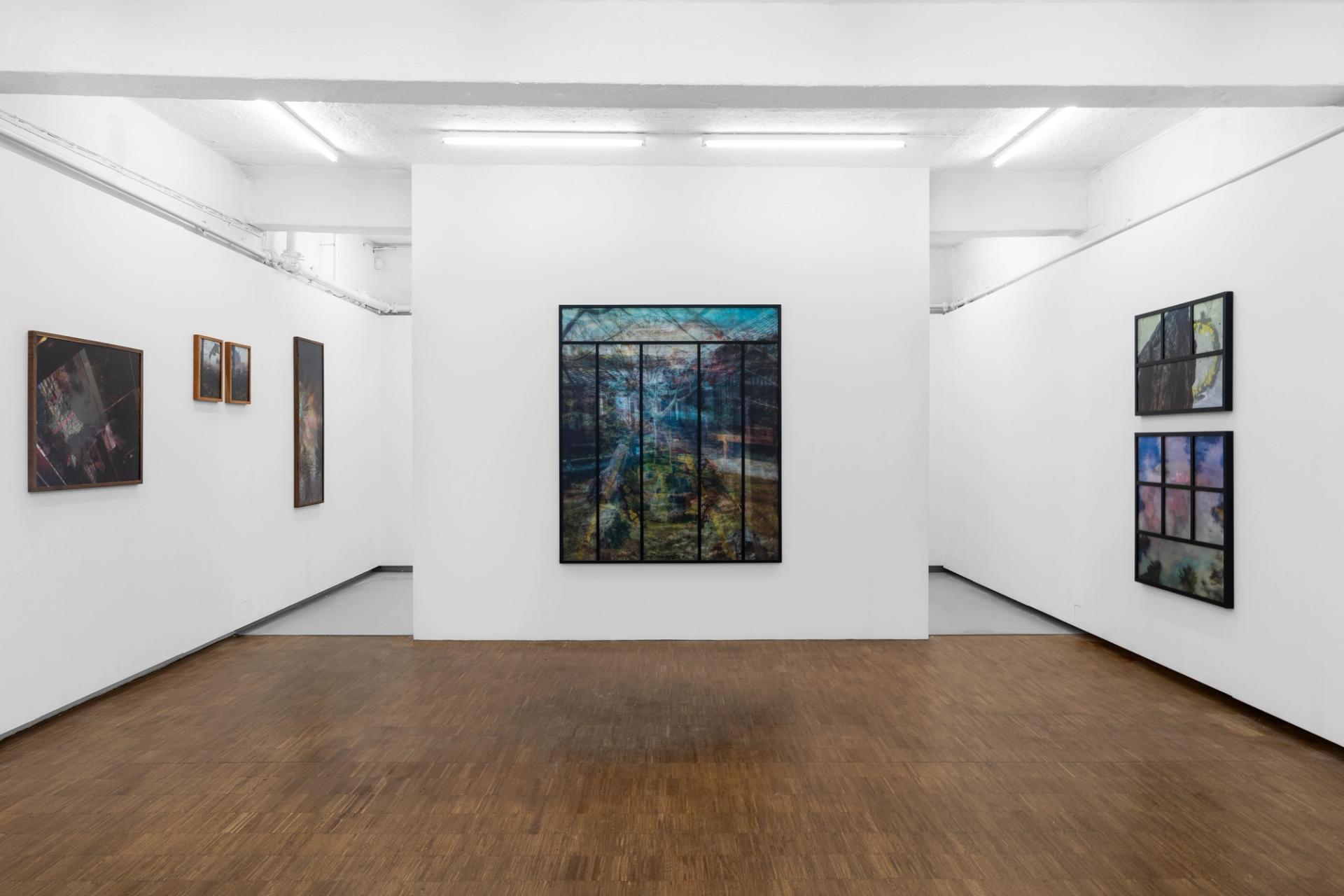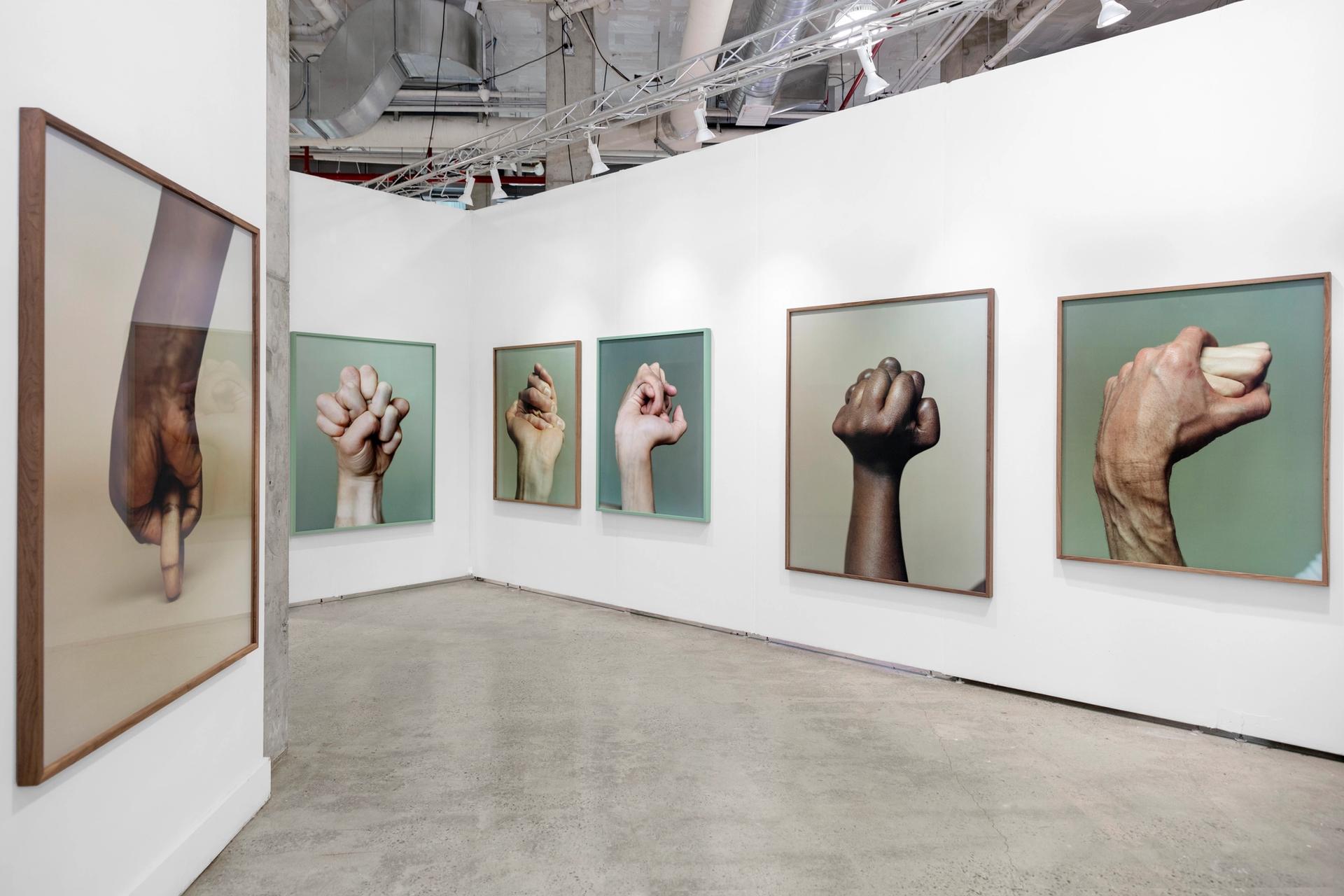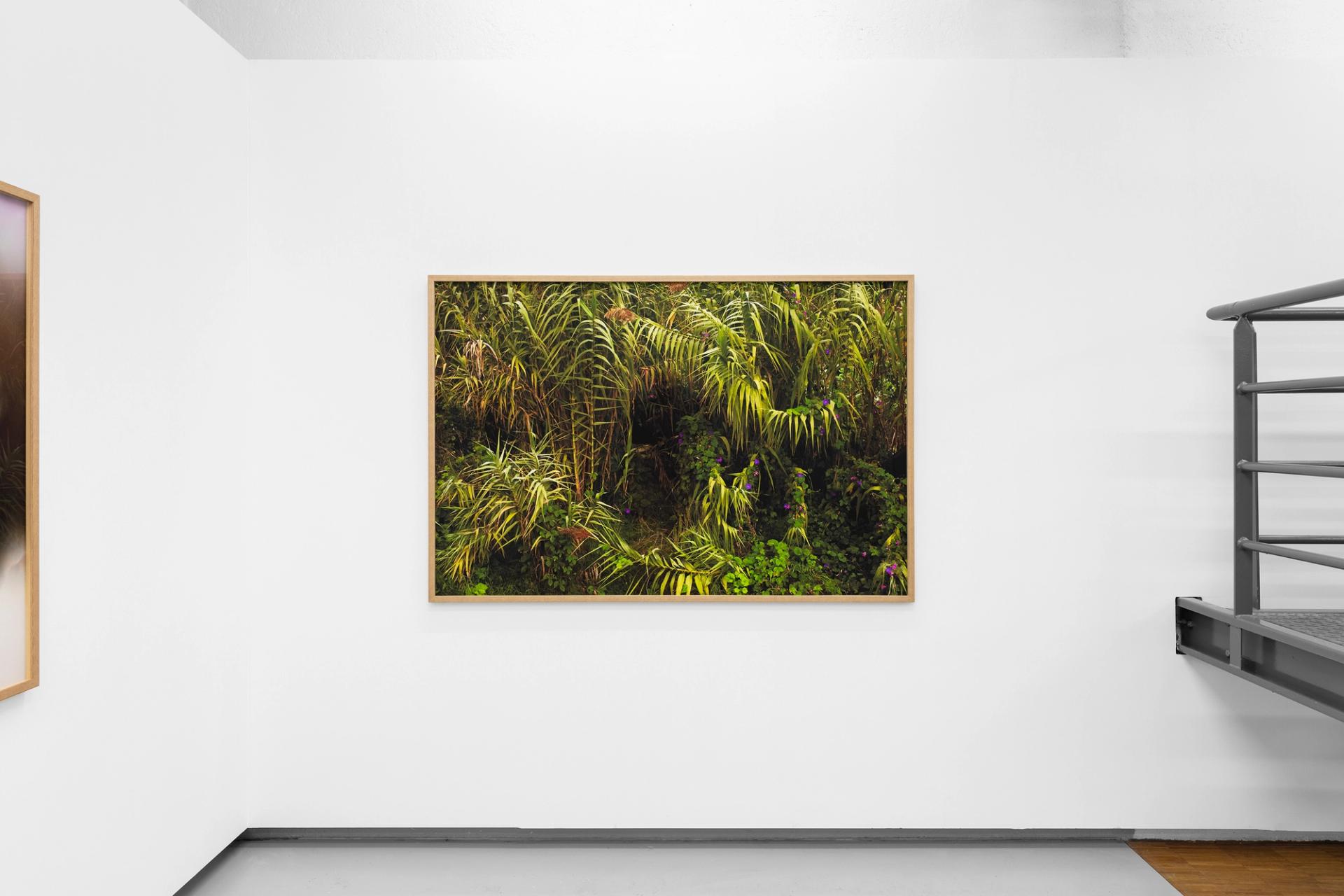
Morten Andenæs (b. Oslo, Norway, 1979) lives and works in Oslo. He has a BFA from the School of Visual Arts in New York City. His works investigate the role of images in how we view the world and ourselves, and his dense photographs of people, animals, landscapes, and objects hint at our fantasies, longings, and desires. Andenæs has exhibited at Henie Onstad Art Centre (NO), Galleri Riis (NO/SE), Kunstnernes Hus (NO), Fotografisk Center (DK), BO (NO), and Fotogalleriet (NO), amongst others. Andenæs is represented in the collections of the National Museum of Norway, Henie Onstad Art Centre, Kunstsilo/Sørlandets Kunstmuseum, the City of Oslo Art Collection, and Kistefos/Christen Sveaas Art Foundation.
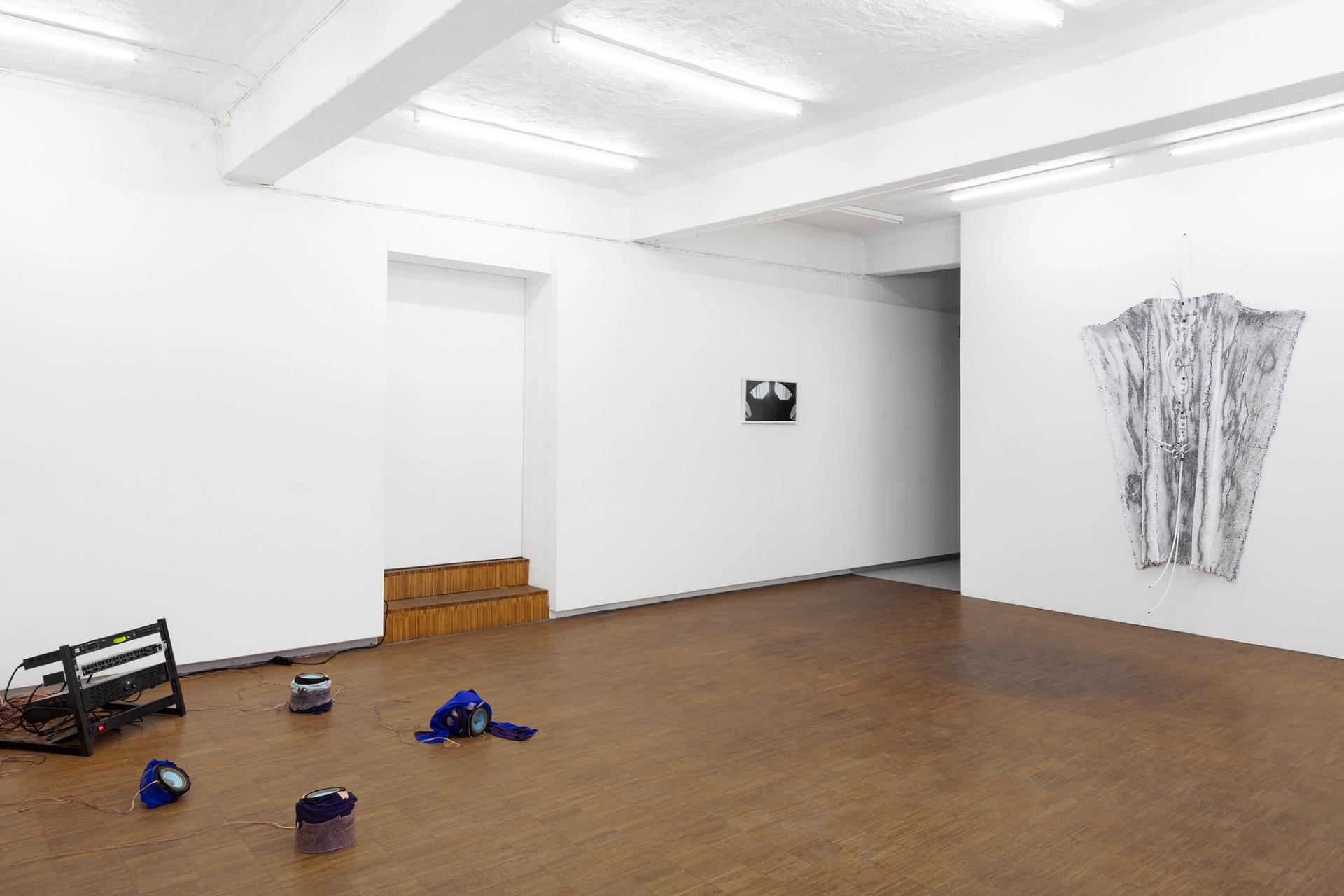
Johanne Hestvold (b. Bergen, Norway, 1988) lives and works in Oslo. She has degrees from Malmö Art Academy and Bergen Academy of Art and Design. She often takes existing objects, forms, and systems as her point of departure. Through processes of transformation, the conditions under which they operate are altered, allowing new connections to emerge while others remain active. Hestvold has exhibited at Norsk Billedhoggerforening (NO), Galleri Golsa (NO), Kunstnerforbundet (NO), Ekebergparken (NO), Bergen Kunsthall (NO), the National Museum (NO), and the Astrup Fearnley Museum (NO), amongst others. Hestvold is represented in the collections of Kunstsilo, the Astrup Fearnley Museum, Drammen Museum, and KORO.
Øyvind Bast (b. Oslo, Norway, 1989) lives and works in Oslo. He has an MA in Architecture from the Oslo School of Architecture and Design. He approaches sculpture through questions of structure, construction, and form, while allowing materials and objects to take on unexpected associations. His works often move between the recognizable and the unfamiliar, combining references to nature, the body, architecture, and everyday objects. He is the co-founder of the artist-run exhibition space Hulias (NO) and Hulias Cantina (IT), and the newly established art fair Barbara (NO). Bast has exhibited at Henriette Wegner Pavilion (NO), ISCA (NO), Salgshallen (NO), Vest-Telemark Museum (NO), Galleri Memphis (NO), and PALASS (NO), amongst others.
Cecilia Jiménez Ojeda (b. Borås, Sweden, 1982) lives and works in Oslo. She has a degree from the Oslo National Academy of the Arts. Her drawings are often situated within larger scenographic and narrative constructions based on experiences and environments from her own life. These fragments can evoke memories of snapshot photography, inviting the viewer to draw connections to their own lives and experiences. Ojeda has exhibited at Standard (NO), Kunstnernes Hus (NO), QB Gallery (NO), Galleri F 15 (NO), and Kunstnerforbundet (NO), amongst others. Ojeda is represented in the collections of the National Museum of Norway, KORO, and the City of Oslo Art Collection.
Max Barel (b. Oslo, Norway, 1996) lives and works in Flatdal. He has a degree from Oslo School of Photography and HDK-Valand in Gothenburg. His work explores the relationship between the familiar and the unfamiliar, inviting us to question our perception of both the ordinary and the peculiar in our surroundings. He has exhibited at Oslo Negativ with BRUU STUDIOS (NO), KB Contemporary (NO), Bastille Design Center (FR), Röda Sten Konsthall (SE), Kösk (NO), Kommunale Galerie (DE), Göteborgs Konstmuseum (SE), and A60 Contemporary Art Space (IT), amongst others. Barel is represented in the collection of the Bank of Norway.
Erlend Rødsten (b. Rygge, Norway, 1996) lives and works in Malmö. He holds an MFA from Malmö Art Academy. Rødsten's practice is sculptural and object-oriented, with particular attention to material properties, exploring the relationship between material, space, and perception. He has exhibited at Moderna Museet Malmö (SE), Ystad Konstmuseum (SE), LIA Leipzig (DE), and Celsius Projects (SE), amongst others. His work is represented in the collection of Malmö Konstmuseum, and he has received grants from the Edstrandska Foundation and Swedbank's Ägarstiftelse Skåne.
Christine Bruu (b. Tønsberg, Norway, 1994) is an art historian and curator who lives and works in Oslo. Her research and curatorial interests focus on phenomenology and psychoanalytic theory. She has a master's degree in Art History and Visual Studies from the University of Oslo and the Norwegian Institute in Rome, as well as degrees in Arts Management and Leadership, and Journalism from Oslo Metropolitan University. She has previously been a guest researcher and academic fellow at the Norwegian Institute in Rome, and an assistant researcher within photography and visual communication at the University of South-Eastern Norway.
We are excited to announce the opening of the group exhibition A Point of Entry with Morten Andenæs, Johanne Hestvold, Øyvind Bast, Cecilia Jiménez Ojeda, Max Barel and Erlend Rødsten at MELK on October 15th. The exhibition is curated by Christine Bruu.
We hope to see you at Elisenbergveien 7 from 18.00–20.00 for the opening.
Tostrups gate 29.
That was the address.
One day in April, while walking to work at MELK gallery, I noticed two yellow iSEKK bags left by the side of the street. Curiosity got the better of me. I slowed down as I passed them, pretending to look at my phone while waiting for the people nearby to leave. I remember wondering why it felt so uncomfortable to look inside the bags while others were around. What would they think of me? That I was snooping? I never considered myself a snoop. I have simply always been curious.
Inside the yellow bags, I found parts of an old cast-iron stove. One of the pieces was decorated with a flower-like seal. I remember thinking how sad it was to throw away something so beautiful; something so old that had probably belonged to a home for decades, until new residents decided that this fragment of history no longer fit into the making of their own. I felt I had to save it. I did not know what I would do with it; I only knew that it felt wrong to leave it behind.
I went into the gallery to find a plastic bag to wrap around the stove, then carried it inside. Tiny traces of charcoal fell from it, leaving a trail behind me. I thought about the wood that had once burned in the stove. When was the last time it had been used? I began imagining the final scene in which it had provided warmth: an old man sitting beside the fire in a poorly insulated apartment in Frogner. Without electric heating, the stove was perhaps the only thing keeping him warm through winter. I pictured thick woolen socks, the kind your grandmother gives you every Christmas, the kind you only begin to appreciate as you grow older. Maybe he wore a knitted sweater his wife had made for him before she passed away. The story kept unfolding in my mind as I slowly constructed a fictional life around a fictional character.
When I came home that evening, I searched for sold apartments in Tostrups gate 29 on Finn.no and quickly found a listing from a couple of months earlier. It showed the complete stove from which my fragment had come. I clicked through the photographs. The apartment dated back to 1897 and still had its original stucco and ceiling moldings. The listing described it as «large and stately», with four bedrooms and classical details. The walls had been stripped of wallpaper, revealing the bare Norwegian pine. It looked as though very little had changed since the 1970s. The stove stood in the corner of the living room. I took a screenshot and did an image search using Google Images. It turned out to have been produced at Bærums Verk in the late 1890s, most likely around the same time the apartment itself was built.
I continued clicking through the photographs in the listing. In one of the bedrooms, old posters had been stapled onto the pine walls; The Swan Lake with the Norwegian National Ballet, dating from 1979; an exhibition poster from Bente Sætrang’s solo exhibition at Galleri F15 from 1986; The Nutcracker with the Norwegian National Ballet (which I was unable to source using Google Images). Another poster simply read KYLIÁN! in large black sans-serif letters above a bare pointed foot and the shadow of a body against a terracotta-colored background. Google Images suggested it was a poster for the Czech choreographer Jiří Kylián. As I copied screenshot after screenshot into Google Images, it dawned on me that the apartment contained traces of things that must once have mattered greatly to someone. A physical life was no longer present, yet fragments of it remained, stapled to the pine walls like a map of existence.
The room that appeared to be the master bedroom was decorated with Oriental tapestries, nude motifs from classical art, and black-and-white photographs of pin-up girls. Above the oak headboard of the bed hung a small reproduction of Paul Gauguin’s D’où venons-nous? Que sommes-nous? Où allons-nous? (1897-1898). The bed was covered with a richly patterned blanket, and a large bookshelf stretched across nearly half of the opposite wall. I lingered over the bookshelf. I wanted to know what kind of books they were. What had the old man underlined? Which pages had he folded? Which books had been read until they fell apart, and which had been bought with every intention of being read one day, only to gather dust? I imagined the old man as one of those quiet, slightly grumpy regulars who sits alone in the corner of a café, smoking a cigarette while reading Klassekampen or a worn copy of Sartre’s L'Être et le Néant (1943), watching everyone around him over the rim of his sunglasses.
For several days, I kept returning to the apartment listing. Every room seemed to offer another fragment from which another story could begin.
The posters still hung on the wall.
Gauguin still watched over the bed.
Sartre still waited on the bookshelf.
The stove still carried traces of charcoal.
– Excerpt from the publication 'A Point of Entry' by Christine Bruu
↓ Previous Shows